Trigger Point Series: Deltoid Muscle and Shoulder Tension

Reaching for a high shelf, carrying groceries or getting through a shoulder workout—your deltoid helps with all of these everyday movements. When the area feels sore or sensitive, even putting on a jacket can become uncomfortable.
In this Trigger Point Series post, we explore the deltoid muscle, the pain patterns traditionally associated with its trigger points, and gentle ways to care for your shoulders.
What is the deltoid muscle?
The deltoid is the muscle that gives your shoulder its rounded shape. It covers the front, outer side and back of the shoulder, connecting the collarbone and shoulder blade to the upper arm.
It has three main parts:
Anterior fibres: At the front of the shoulder, helping lift your arm forward.
Middle fibres: Along the outer shoulder, helping raise your arm out to the side.
Posterior fibres: At the back of the shoulder, helping move your arm backward.
These parts work with the rotator cuff and other muscles to support coordinated shoulder movement.
Trigger point location: where are the sensitive areas?
Commonly illustrated sensitive areas lie within the fleshy portions of the deltoid:
At the front of the shoulder, below the outer end of the collarbone.
Along the outer shoulder cap.
At the back of the shoulder, below the shoulder blade’s upper ridge.
Their location varies between people. Your RMT considers your health history, movement and tenderness together rather than assuming that every marked point needs treatment.
Avoid digging into the shoulder or repeatedly pressing a sore spot. More pressure does not necessarily lead to better results.

Pain pattern: where might you feel discomfort?
Traditional trigger point descriptions associate deltoid tenderness mainly with discomfort around the shoulder itself.
Anterior deltoid: Aching may be felt at the front and outer part of the shoulder.
Posterior deltoid: Discomfort may be felt at the back and outer part of the shoulder.
You might notice soreness when lifting your arm, reaching or lying on the affected side. However, these symptoms are not specific to deltoid trigger points. Rotator cuff problems, joint irritation and other conditions can produce similar discomfort.
A pain-pattern illustration is a guide to commonly described areas—not a diagnosis.

What may contribute to deltoid soreness?
The deltoid can become sore following a change in activity or an unexpected load. Examples worth discussing with your therapist include:
Increasing shoulder presses, lateral raises or other upper-body exercises.
Repeated overhead work, such as painting or stocking shelves.
Carrying or lifting heavy objects.
A sudden pull, impact or awkward movement.
Discomfort after an injury should be assessed before being treated as routine muscle tension.
How can massage therapy help?
Your RMT can assess comfortable shoulder movement and discuss which activities bring on your symptoms. When appropriate, treatment may include the deltoid and surrounding shoulder, chest and upper-back muscles.
Massage may offer short-term relief for some shoulder pain, although results vary. Treatment should use pressure you can comfortably tolerate and may be combined with advice about movement and activity.
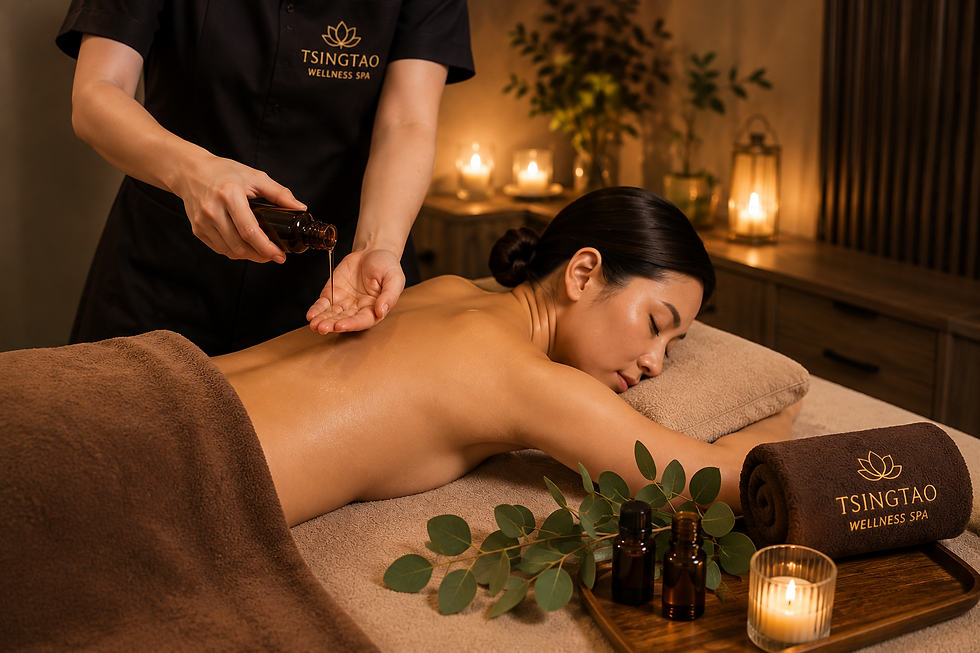
At Tsingtao Wellness Spa, tell your therapist if an area feels sharp, sensitive or uncomfortable. Your feedback helps guide the session.

Stretch exercise: a gentle cross-body shoulder stretch
This stretch focuses on the back of the shoulder, including the posterior deltoid. If stretching is suitable for you:
Stand or sit upright with your shoulders relaxed.
Bring one arm gently across the front of your chest.
Use your opposite hand to support the upper arm, just above the elbow.
Guide the arm slightly closer until you feel a comfortable stretch behind the shoulder.
Hold for up to 30 seconds while breathing normally.
Release slowly and repeat on the other side.
Keep your shoulder down rather than lifting it toward your ear. Support the upper arm without pressing directly on the elbow joint. The stretch should not hurt.

What about the front of the shoulder?
A gentle doorway chest stretch may also create a stretch across the front shoulder. Rest your forearms against a doorway with your elbows slightly below shoulder height, then shift forward a small amount.
Avoid forcing your arms backward or raising them higher to intensify the stretch. Ask your RMT or physiotherapist which position suits your shoulders.
Stop either stretch if you experience sharp pain, pinching, tingling or numbness. Seek individual guidance after an injury or surgery.
Small habits that support shoulder comfort
Give your shoulders a manageable balance of movement and recovery:
Increase exercise weights and repetitions gradually.
Take breaks during repeated overhead tasks.
Keep frequently used items within easy reach.
Change position regularly during desk work.
Use comfortable movement instead of forcing through pain.
If symptoms persist or keep returning, an assessment can help identify what needs attention.
When should you seek medical advice?
Get urgent medical advice for sudden severe shoulder pain, inability to move your arm, significant swelling or a change in shoulder shape, persistent numbness, or shoulder pain with fever or feeling unwell. Pain following a fall or accident also deserves prompt assessment.
Give your shoulders a moment of care
At Tsingtao Wellness Spa in Markham and Vaughan, professional RMT care meets a warm, welcoming spa experience.
Whether your shoulders feel tired after work or sore following activity, share your concerns and goals with your therapist so your treatment can be tailored to your needs. RMT Insurance covered.
A little care for your shoulders. A little time for yourself.
Markham: 289-554-7787 Vaughan: 365-597-5777 Book: www.tsingtaospa.com
This article is for general education and does not replace medical assessment or individual treatment advice.