


Fall Garden Cleanup: Looking After Your Back, Shoulders and Hands

Golden leaves, crisp air and one last weekend in the garden—fall is a beautiful time to be outdoors. But collecting leaves, cutting back perennials and moving pots into storage can leave your body feeling as though you’ve done a workout.
If your shoulders feel tight after raking or your lower back aches after filling garden bags, the amount of work may have caught your muscles by surprise.
A little preparation, a manageable pace and thoughtful care afterward can help you enjoy the season more comfortably.

Why does fall gardening make you sore?
Gardening combines repeated movements with positions you may not hold during your usual day. Pulling a rake, gripping pruning shears or leaning over a flower bed can keep the same muscles working for longer than you realize.
Raking, in particular, places demands on the back, shoulders and arms. Reaching too far or repeatedly twisting while pulling can add to the workload.
Here are some areas you might notice after different garden jobs. These are muscles commonly involved in the activity—not a diagnosis of what is causing your pain.
Garden task | Where you may feel it | Muscles doing some of the work |
Raking or sweeping leaves | Neck, shoulders, between the shoulder blades, forearms and lower back | Trapezius, rhomboids, deltoids, forearm muscles and back extensors |
Lifting leaf bags, soil or pots | Lower back, buttocks and thighs | Back extensors, gluteal muscles and quadriceps |
Weeding, planting bulbs and clearing beds | Back, hips, thighs and knees | Back and hip muscles, with the thighs working as you lower yourself and stand |
Pruning and cutting back plants | Hands, forearms and shoulders | Finger and wrist flexors and extensors, plus shoulder muscles |
Knee discomfort from kneeling may also come from pressure on the joint and surrounding tissues, rather than muscle soreness alone.

Before you start: a gentle five-minute warm-up
Give yourself a few minutes to move before picking up the tools. Warming up is one part of preparing for the work; it cannot guarantee that an injury won’t happen.
Try this easy routine within a comfortable range:
Walk around the garden for two minutes. Start gently, then gradually increase your pace.
Roll your shoulders slowly. Make five circles in each direction, then add a few relaxed arm swings.
Move your hands and wrists. Open and close your hands ten times, then gently bend and straighten your elbows.
Practise five shallow hip hinges. Soften your knees, move your hips backward slightly and lean forward while keeping your back in a comfortable, natural position.
Finish with gentle marching or heel raises. Hold a stable support if needed.
Begin the actual gardening slowly, too. Your first few minutes don’t need to be your hardest.

Make the job easier on your body
When collecting leaves
Keep the rake reasonably close and move your feet to reach a new patch instead of stretching farther from the same spot. Use manageable pulls, switch your hand position occasionally and avoid repeatedly twisting through your lower back.
Take a short break about every 20–30 minutes—or sooner if you feel tired. There is no need to finish the whole garden in one session.
When lifting bags and moving pots
Make loads smaller before lifting them. Get close, bend comfortably through your hips and knees, and keep the load near your body. Turn by moving your feet rather than twisting while carrying.
For awkward pots or heavy bags, use a suitable trolley or ask someone to help. Reducing the load and the amount of repeated lifting matters as much as technique.
When working in garden beds
Use a kneeling pad or garden seat, bring tools within easy reach and change position regularly. Alternate between jobs so your hands, shoulders or back aren’t doing the same movement all afternoon.
After gardening: keep stretching gentle
Once you’ve put the tools away, take a short, easy walk before settling into a chair.
For shoulders that feel tired after raking, try a gentle cross-body stretch:
Relax your shoulders.
Bring one arm across your chest.
Support it at the upper arm with your opposite hand.
Hold comfortably for up to 30 seconds, then change sides.
You should feel a gentle stretch behind the shoulder. Avoid pulling directly on the elbow, bouncing or forcing the movement. Stop if it hurts.

How can massage help after fall gardening?
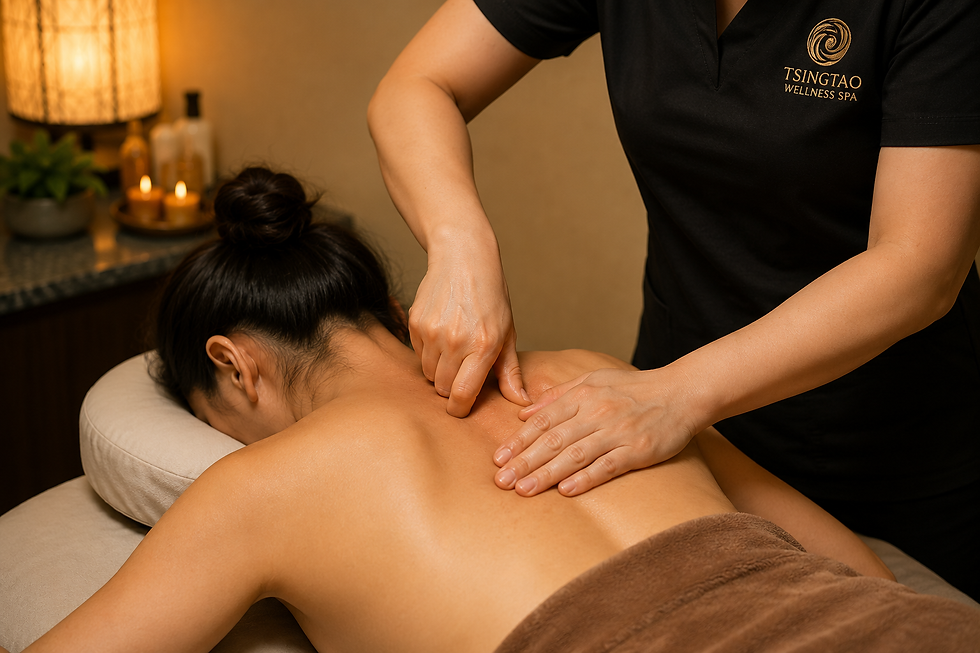
After a busy afternoon outside, massage can offer time to rest and address areas that feel uncomfortable.
Massage may provide short-term relief for some neck and shoulder pain. Evidence for low-back pain is less certain, and research does not establish that massage prevents gardening injuries or makes every sore muscle recover faster.
At Tsingtao Wellness Spa, tell your RMT what you were doing and where you feel the discomfort. Was it repeated raking, carrying garden bags or spending a long time bent over a bed? That information helps guide the assessment and treatment.
Your session may focus on tired shoulders, forearms or other appropriate areas, with pressure adjusted to your comfort. A freshly sore area does not automatically need deep pressure.
Our RMT massage treatments in Markham and Vaughan combine individualized care with a warm, relaxing spa setting—a welcome pause after a weekend of garden work.
When soreness needs more attention
Don’t push through sharp or worsening pain. Seek medical advice for significant swelling, new numbness or weakness, or pain that limits everyday activities or isn’t improving.
Back pain accompanied by new bladder or bowel changes, numbness around the groin, or symptoms in both legs needs emergency medical assessment.
Make time for yourself, too
Getting the garden ready for winter takes effort. Give your body the same attention you give your outdoor space: prepare, pace yourself and leave room to recover.
When you’re ready for a little care after the cleanup, visit Tsingtao Wellness Spa.
Markham: 289-554-7787
Vaughan: 365-597-5777
Website: www.tsingtaospa.com
Take a moment. Feel better.


