


Trigger Point Series: SCM Muscle – Can It Cause Headaches and Facial Pain?
- Apr 12, 2017
- 2 min read
Updated: Jul 28

Sometimes the source of your pain isn't where you feel it.
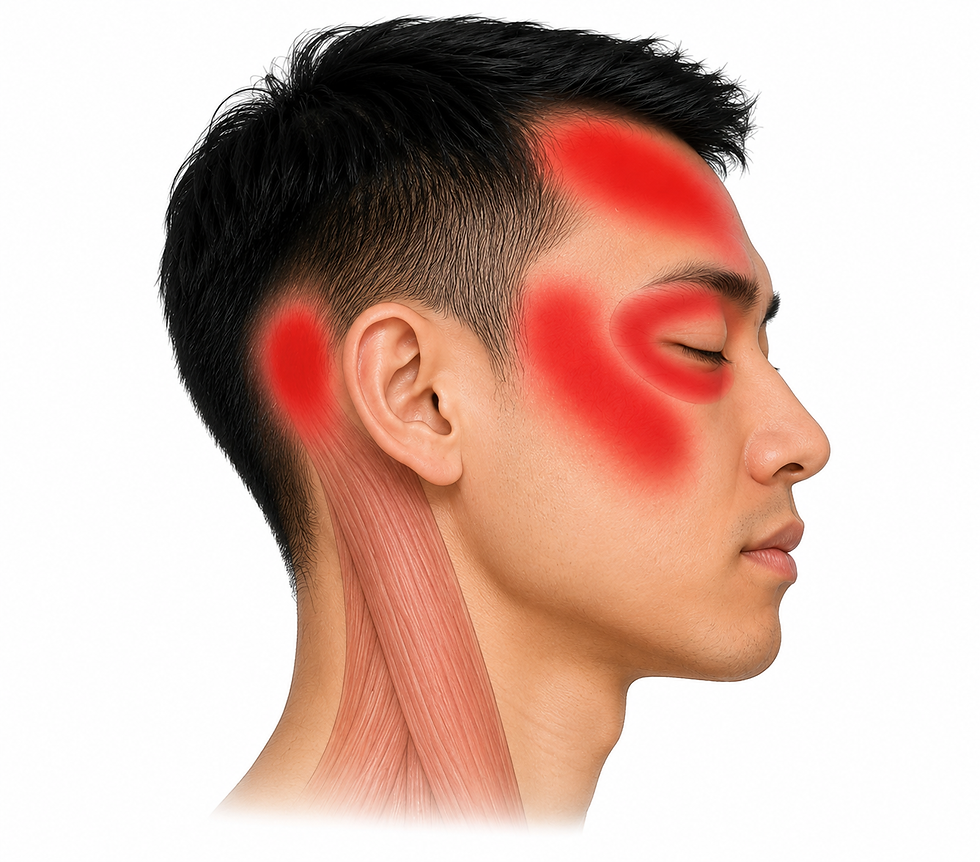
A tight sternocleidomastoid (SCM) muscle—one of the large muscles running along the front and side of your neck—can develop trigger points that refer pain to other areas of your head and face.
Many people assume they have sinus problems, migraines, or eye strain, when the real source may actually be tension in the SCM muscle.
Where Is the SCM Muscle?
The sternocleidomastoid (SCM) is a long muscle located on both sides of your neck.
It runs from just behind your ear down to your collarbone and breastbone.
You can easily feel it by turning your head to one side—the muscle that stands out along the side of your neck is your SCM.

Common Symptoms of SCM Trigger Points
When trigger points develop in the SCM, you may notice pain in areas such as:
✅ Forehead
✅ Around the eyes
✅ Behind the ear
✅ Cheek
✅ Temple
✅ Side of the face
Some people may also experience:
Neck stiffness
Headaches
Dizziness
A feeling of tightness when turning the head
Because the pain is "referred," many people don't realize the neck muscle is actually the source.
What Causes Trigger Points in the SCM?
Common causes include:
Looking down at your phone for long periods
Poor desk posture
Sleeping in an awkward position
Stress and muscle tension
Repetitive turning of the head
Whiplash or previous neck injuries
Over time, these habits can overload the muscle and allow trigger points to develop.
Simple Stretch to Relax the SCM
Try this gentle stretch:
Sit or stand with good posture.
Tilt your head slightly backward.
Turn your head away from the side you want to stretch.
Hold for 20–30 seconds.
Repeat 2–3 times on each side.
You should feel a gentle stretch along the front and side of your neck.
Never stretch into sharp pain.

Strengthening Exercise
Once the muscle feels more relaxed, gentle strengthening may help improve neck stability.
Chin Tuck with Gentle Resistance
Place your palm against your forehead.
Gently press your head forward while resisting with your hand.
Hold for 5 seconds.
Repeat 10 times.
This is an isometric exercise, meaning your head doesn't actually move.
How Massage Therapy Can Help
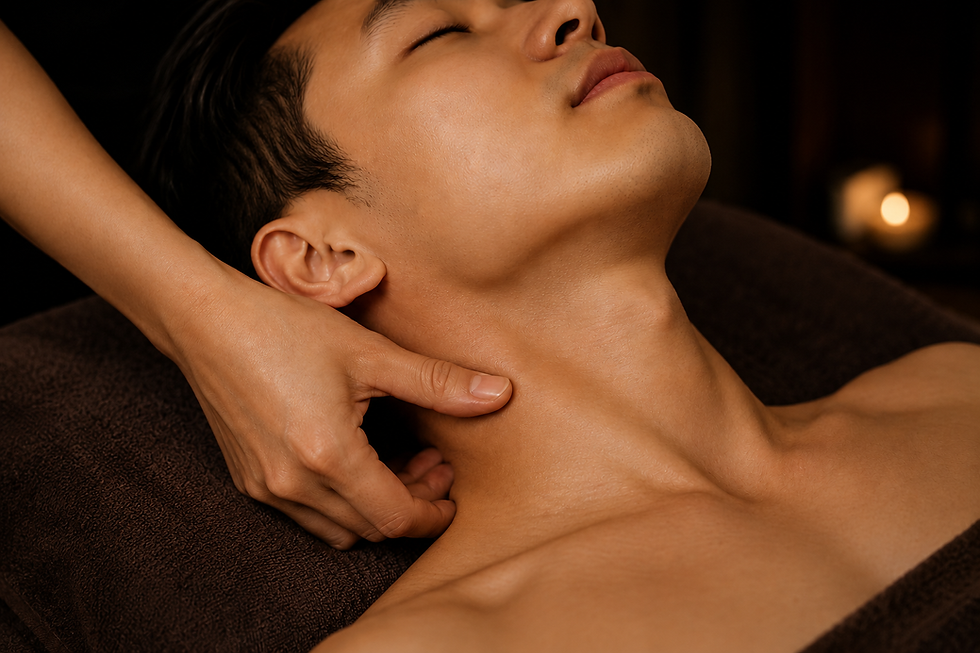
Registered Massage Therapists can identify trigger points within the SCM and use techniques such as:
Trigger Point Therapy
Myofascial Release
Therapeutic Massage
Stretching Techniques
Combined with home stretching and strengthening exercises, massage therapy may help reduce muscle tension and improve neck mobility.
When Should You See a Professional?
If your headaches, neck pain, or facial discomfort continue to return, it's worth having the muscle assessed by a Registered Massage Therapist.
Treating the source of the trigger point—not just where the pain is felt—can often make a meaningful difference.
Visit Tsingtao Wellness Spa
At Tsingtao Wellness Spa, our Registered Massage Therapists provide personalized treatments to help relieve muscle tension, improve mobility, and support your overall wellness.
Whether you're experiencing neck discomfort, tension headaches, or everyday muscle tightness, we're here to help you Relax. Recover. Renew.


